Don't Panic, But Don't Wait
Winter leaks are some of the most common calls we get. Water stains appear on the ceiling during a thaw, drips show up around a skylight, or the attic smells damp. In a Chicago winter, a small leak can quickly turn into soaked insulation, ruined drywall and mold, so the sooner it's handled the better.
Here's what to do in the first hour, what usually causes winter leaks, and when to call a roofer.
What to Do Right Now
Roof Leaking Right Now?
We handle emergency and winter leak repairs across Chicago and the suburbs.
Request Help NowThe 4 Most Common Causes of Winter Leaks
1. Ice Dams
Heat escaping from your house melts snow on the roof. The water runs down to the cold edge of the roof, refreezes, and builds a ridge of ice. More melting water pools behind that ice and backs up under the shingles. This is the number one winter leak we see in Chicagoland. Signs: thick ice along the gutters, big icicles, and stains on ceilings or walls near the outside walls. Our ice dam prevention guide covers how to stop them.
2. Attic Condensation
Sometimes it isn't the roof at all. Warm, moist air from the house rises into a cold attic and condenses on the underside of the roof deck as frost. When it warms up, that frost melts and drips, and it looks exactly like a roof leak. The fix is usually better attic ventilation and sealing air leaks from the house, not new shingles.
3. Flashing Failures
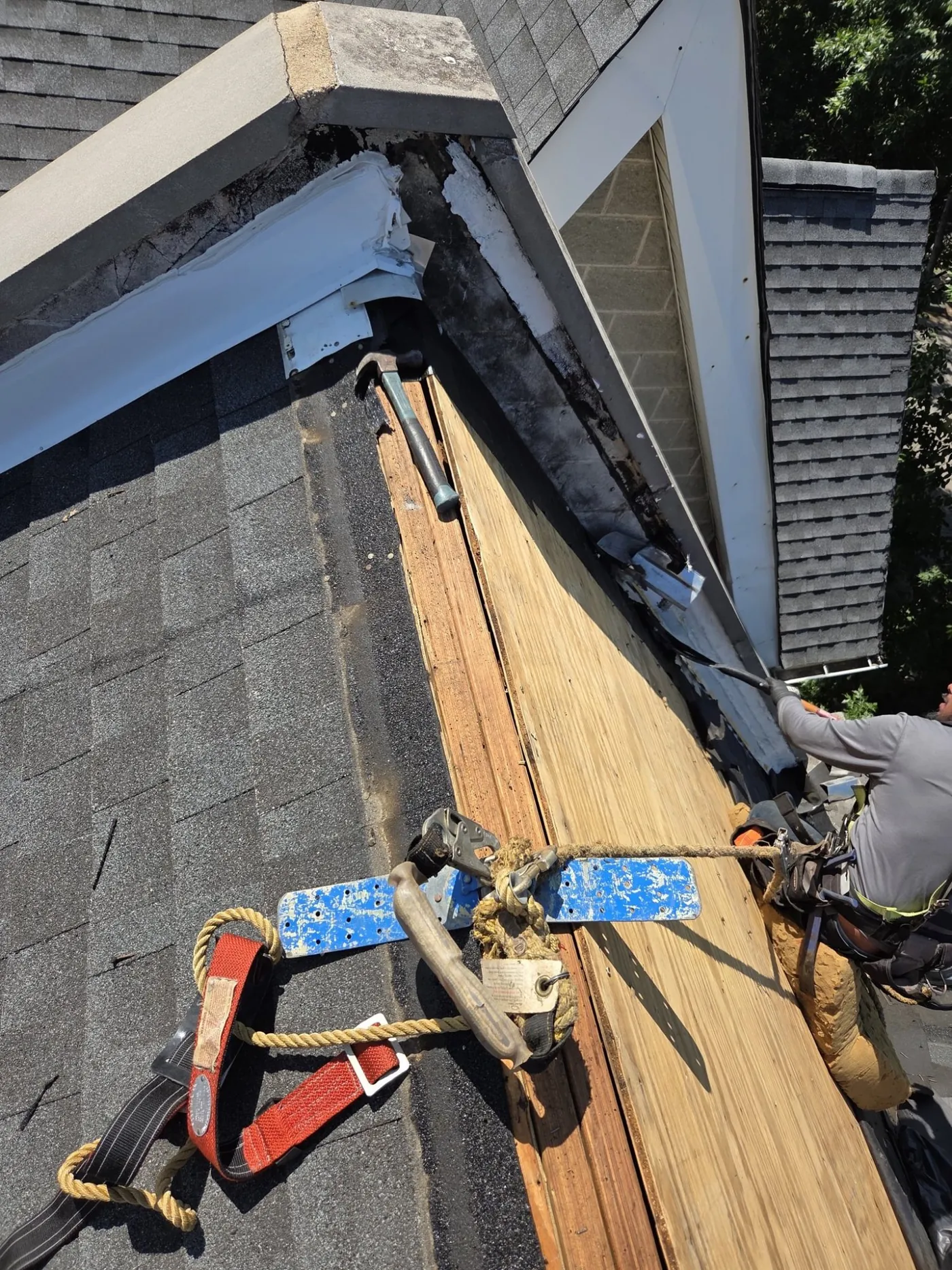
Freeze-thaw cycles open up gaps around chimneys, skylights, walls and vent pipes. Flashing that was borderline in the fall often starts leaking in January.
4. Storm and Wind Damage
Winter winds can lift and crack cold, brittle shingles. A missing shingle lets snowmelt straight into the underlayment.
Can a Roof Be Repaired in Winter?
Yes. Many winter repairs, like flashing repairs, replacing damaged shingles, sealing pipe boots and fixing flat roof seams, can be done whenever there's a dry window. If the weather won't allow a permanent repair right away, a roofer can tarp or temporarily seal the area to stop the water, then make the permanent fix when conditions allow. See our roof repair and emergency roof repair pages.
Will Insurance Cover a Winter Leak?
It depends on the cause. Sudden damage, like wind tearing off shingles or a tree limb falling on the roof, is often covered. Many policies also cover interior damage from ice dams, even when they don't pay for the ice dam removal itself. Leaks from an old, worn-out roof are usually not covered. Read your policy, take photos, and call your agent. Our guide to storm damage insurance claims in Illinois walks through the process.
How to Prevent the Next One
- Keep gutters and downspouts clear before winter
- Make sure your attic has enough insulation and ventilation so the roof stays cold
- Use a roof rake from the ground to pull snow off the bottom few feet of the roof after big storms
- Get a free roof inspection once a year, and after any major storm
Frequently Asked Questions
Why is my roof leaking only in winter?
Winter-only leaks are usually caused by ice dams, attic condensation or flashing that opens up during freeze-thaw cycles. The fix depends on which one it is, so it's worth having the roof and attic inspected.
Can a roof leak be fixed in the winter?
Yes. Most repairs can be done on a dry day, and if a permanent repair has to wait, a roofer can tarp or temporarily seal the area to stop the water.
How do I know if it's a roof leak or condensation?
Condensation tends to appear as frost or dampness spread across the underside of the roof deck and shows up after cold snaps. A roof leak usually shows up in one spot, often near a chimney, vent, skylight or the roof edge, and gets worse during rain or melting snow.
Does homeowners insurance cover ice dam leaks?
Many policies cover interior water damage caused by ice dams, but coverage varies. Check your policy, take photos and contact your agent.