What Is an Ice Dam?
An ice dam is a ridge of ice that forms along the edge of your roof, usually at the eaves. It prevents melting snow from draining off the roof. The trapped water backs up behind the dam and seeps under your shingles, into your decking, down your walls, and into your home. The result: water-stained ceilings, soaked insulation, mold growth, rotted framing, and repair bills that can run into the thousands.
Ice dams are the single most common cause of winter roof damage across Hinsdale, Oak Brook, Elmhurst, Highland Park, Park Ridge, Wilmette, Glencoe, Northbrook, and all of Chicagoland. And almost every one of them is preventable.
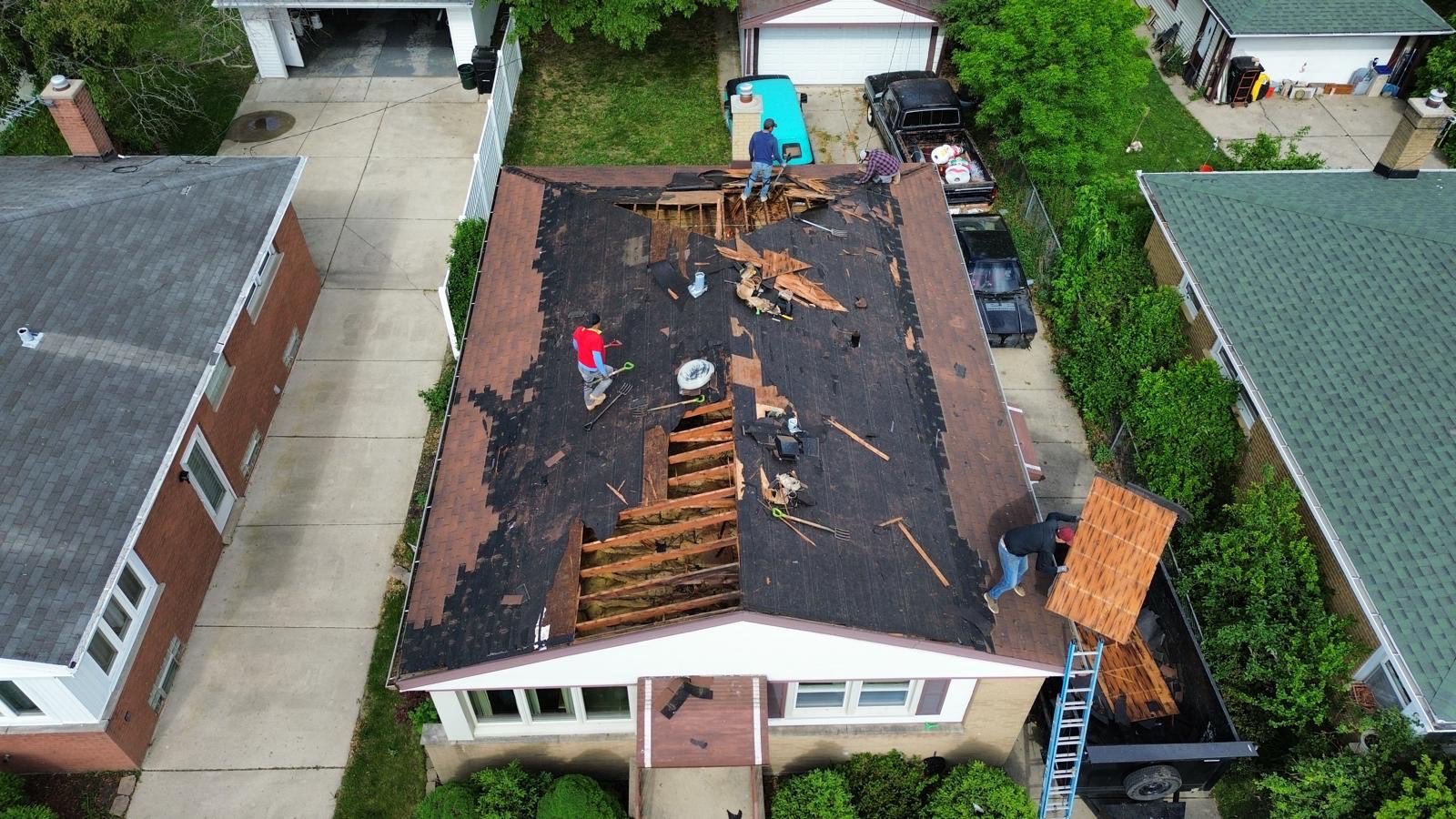
How Ice Dams Form
The process is simple but destructive. It starts with heat escaping from your living space, through the attic, and warming the roof surface. Snow on the warmed section melts. The meltwater runs down the roof until it hits the eaves — the overhanging edge that's not heated from below. The water refreezes there, forming ice. More meltwater backs up behind the ice ridge. With nowhere to go, it works its way under shingles and into your home.
The Real Cause: Your Attic, Not Your Roof
Most homeowners blame their roof when they get ice dams. But in almost every case, the real problem is in the attic — specifically, inadequate insulation and poor ventilation. Heat from your living space rises into the attic, warms the roof deck, and starts the melt-freeze cycle.
A properly insulated and ventilated attic stays cold in winter — as cold as the outside air. When the attic is cold, the roof surface stays uniformly cold, snow doesn't melt unevenly, and ice dams can't form.
How to Prevent Ice Dams
1. Add Attic Insulation
This is the #1 fix. The Department of Energy recommends R-49 insulation for Chicago-area attics — that's about 16-18 inches of fiberglass batts or 12-14 inches of blown cellulose. Most older Chicago homes have far less. Adding insulation is a one-time investment that prevents ice dams, lowers heating bills, and pays for itself within a couple winters.
2. Seal Attic Air Leaks
Even with good insulation, warm air can leak into the attic through gaps around light fixtures, plumbing vents, electrical wiring, attic hatches, and ductwork. These leaks warm the attic and contribute to ice dams. Sealing them with caulk, spray foam, or weatherstripping is cheap and effective.
3. Ensure Proper Ventilation
Your attic needs continuous airflow — cold air in through soffit vents at the bottom, warm air out through ridge vents at the top. This circulation keeps the attic cold and removes any moisture. Make sure soffit vents aren't blocked by insulation — install baffles to keep the airflow path clear.
4. Install Ice and Water Shield
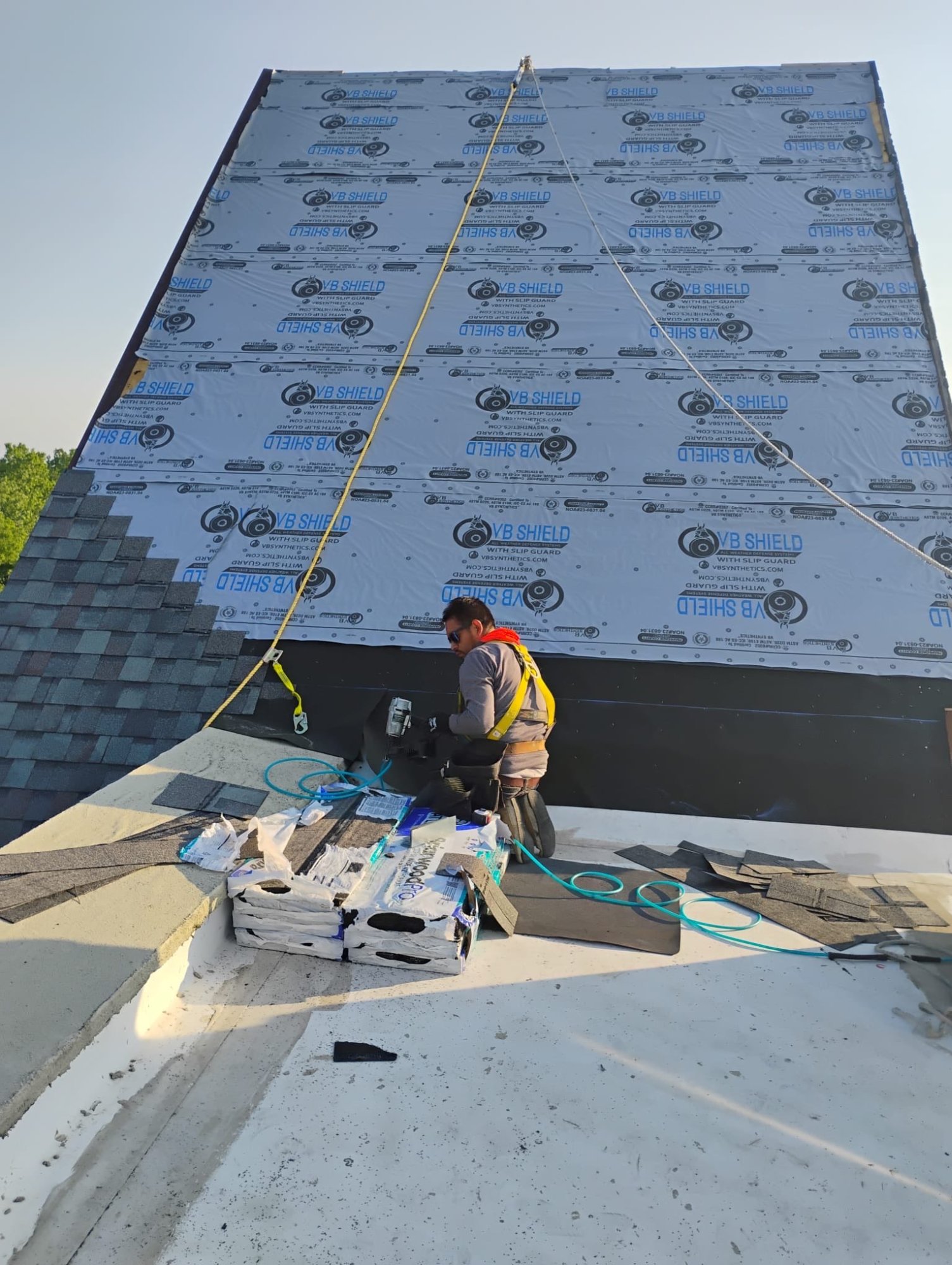
During a roof replacement, we install ice and water shield — a self-adhesive membrane — along the eaves, in valleys, and around penetrations. This acts as a backup waterproofing layer. Even if some water gets under the shingles, the membrane prevents it from reaching the decking. Chicago building code requires it along eaves, and we recommend extending it at least 3 feet past the interior wall line.
5. Keep Gutters Clean
Clogged gutters don't directly cause ice dams, but they make them worse. When gutters are full of debris, ice builds up faster and the dam grows larger. Clean gutters in late fall after all leaves have dropped.
What NOT to Do
What to Do If You Already Have an Ice Dam
Short term: Fill a tube sock or pantyhose with calcium chloride ice melt. Lay it across the ice dam perpendicular to the gutter. It will slowly melt a channel through the ice, allowing trapped water to drain. This is a temporary fix, not a solution.
Long term: Call a professional to address the root cause — insulation, ventilation, and air sealing. A proper fix eliminates ice dams permanently instead of fighting them every winter.
If water is coming inside: Call a roofer immediately. Active leaks from ice dams can cause rapid damage to ceilings, walls, and electrical systems. We offer emergency service for ice dam damage across the Chicago suburbs.

Worried About Ice Dams This Winter?
Get a free inspection — we'll check your roof, attic insulation, and ventilation before the cold sets in.
Schedule Your Free Inspection