Two Great Options — But They're Very Different
If you own a commercial building or a home with a flat roof in Chicago, you've probably heard of TPO and modified bitumen. They're the two most commonly installed flat roofing systems in the Midwest, and for good reason — both are proven, reliable, and well-suited to our climate. But they work very differently, cost different amounts, and have different strengths.
At GSKI Construction, we install both systems regularly across Chicago, Hinsdale, Oak Brook, Elmhurst, and the surrounding suburbs. Here's an honest breakdown to help you decide which one is right for your property.
The Quick Comparison
| Factor | TPO | Modified Bitumen |
|---|---|---|
| Cost (installed) | $5.50 – $9.00/sq ft | $4.00 – $7.50/sq ft |
| Lifespan | 20 – 30 years | 15 – 20 years |
| Energy Efficiency | Excellent — reflects UV, lowers cooling costs | Moderate — dark surface absorbs heat |
| Installation Method | Heat-welded seams | Torch-applied or self-adhered |
| Durability | Strong — resists punctures and chemicals | Very strong — handles foot traffic well |
| Maintenance | Minimal — seams rarely fail | Moderate — seams can crack over time |
| Best For | Commercial buildings, energy savings | Low-slope residential, budget projects |
| Cold Weather | Good — stays flexible | Excellent — proven in harsh winters |
| Warranty | Up to 30 years (manufacturer) | 10 – 20 years (manufacturer) |
What Is TPO Roofing?
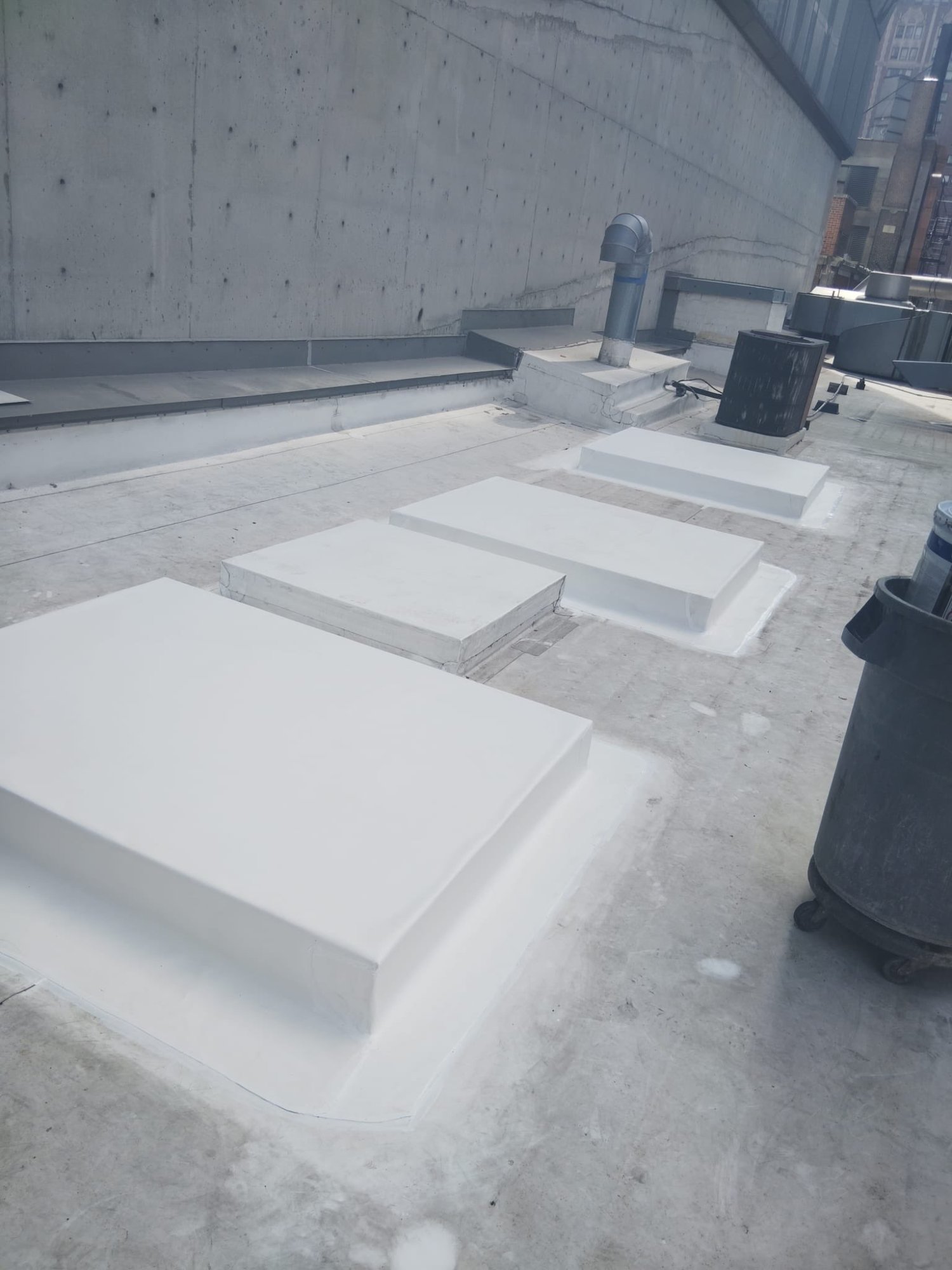
TPO (Thermoplastic Polyolefin) is a single-ply roofing membrane that's become the most popular commercial flat roof system in the country over the past 15 years. It comes in large white rolls that are laid across the roof deck over insulation boards, and the seams are heat-welded together using a hot-air gun — creating a watertight, continuous membrane.
The biggest selling point is energy efficiency. TPO's white reflective surface bounces UV rays instead of absorbing them, which can significantly reduce cooling costs during Chicago's hot summers. For large commercial buildings with big flat roofs, the energy savings alone can offset the higher installation cost within a few years.
Pros of TPO
Energy savings — the reflective white surface can reduce cooling costs by 10-30% on large buildings. Some TPO systems qualify for Energy Star certification.
Long lifespan — quality TPO roofs last 20-30 years with proper installation and minimal maintenance.
Chemical resistance — TPO stands up well to grease, oils, and chemicals, making it ideal for restaurants, industrial buildings, and facilities with rooftop equipment.
Welded seams — heat-welded seams are actually stronger than the membrane itself. Unlike glued seams, they rarely separate over time.
Lightweight — puts less structural load on your building compared to built-up or modified bitumen systems.
Cons of TPO
Higher upfront cost — typically 20-30% more than modified bitumen to install.
Requires skilled installation — heat welding needs experienced crews. Poorly welded seams are the number one cause of TPO failures. This is why choosing the right contractor matters.
Puncture risk — while durable, TPO can be punctured by sharp debris or heavy foot traffic on thinner membranes. Walkway pads are recommended for high-traffic areas.
What Is Modified Bitumen Roofing?
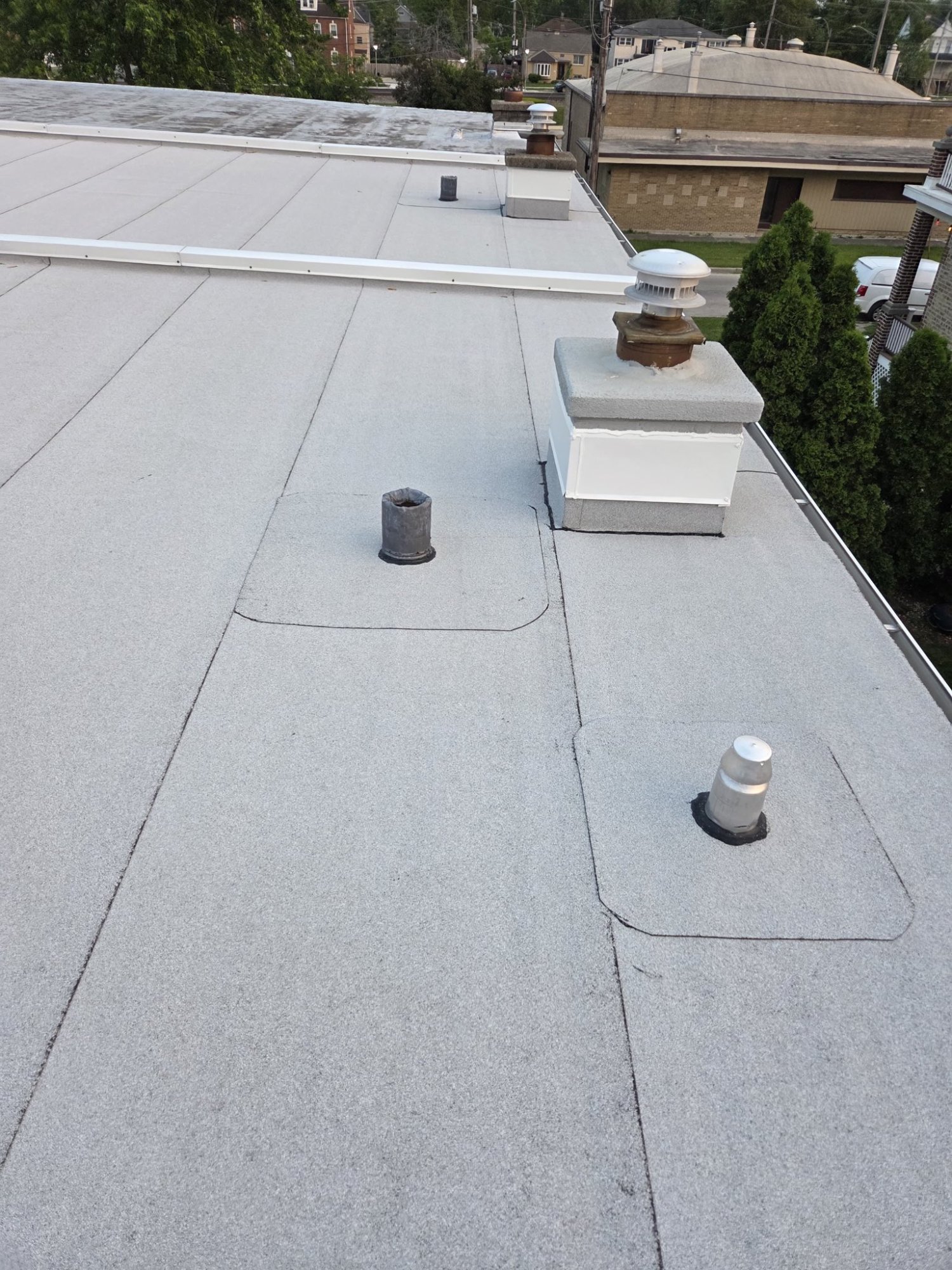
Modified bitumen (often called "mod bit") is an asphalt-based roofing system that's been used since the 1960s. It's essentially a modern evolution of the old tar-and-gravel built-up roof. The material comes in rolls with a rubberized asphalt compound reinforced with fiberglass or polyester — making it flexible, durable, and waterproof.
Installation is typically done by torch-applying (melting the underside with a propane torch to bond it to the deck) or using self-adhering sheets. Many Chicago contractors still prefer mod bit for residential flat roofs and smaller commercial buildings because it's proven, affordable, and handles our freeze-thaw cycles extremely well.
Pros of Modified Bitumen
Lower cost — typically the most affordable flat roof option. Great for budget-conscious property owners.
Proven track record — decades of performance data in Chicago's climate. Contractors know this system inside and out.
Handles foot traffic — the granulated cap sheet is tough and can take regular foot traffic without walkway pads.
Cold weather performance — the rubberized compound stays flexible in extreme cold, which matters during Chicago winters.
Easy to repair — patches and repairs are straightforward and inexpensive.
Cons of Modified Bitumen
Shorter lifespan — 15-20 years is typical, compared to 20-30 for TPO.
No energy savings — the dark surface absorbs heat. Your building will be hotter in summer and your cooling costs will be higher.
Seam vulnerability — over time, seams can crack or separate, especially through freeze-thaw cycles. Regular inspection is important.
Torch application risk — torch-down installation carries fire risk if not done by experienced crews. Some building codes restrict it.
Which One Should You Choose?
Choose TPO if:
You own a commercial building with a large flat roof. You want to reduce energy costs. You want a longer lifespan and warranty. You're willing to invest more upfront for lower long-term costs. Your building has rooftop equipment that generates heat or chemicals.
Choose Modified Bitumen if:
You have a smaller residential flat roof (like a Chicago bungalow or two-flat). Budget is your primary concern. You need a quick, reliable installation. You expect regular foot traffic on the roof. You're replacing an existing mod bit roof and want to stick with what works.
What about PVC and EPDM?
TPO and mod bit aren't the only options. PVC is similar to TPO but even more chemical-resistant — ideal for restaurants and industrial buildings. EPDM (rubber roofing) is the most affordable single-ply option but doesn't have TPO's energy-saving benefits. Both are solid choices depending on your situation. GSKI installs all four systems.
Cost Comparison for Chicago Properties
| Building Size | TPO (installed) | Modified Bitumen (installed) | Savings with Mod Bit |
|---|---|---|---|
| 1,000 sq ft (small) | $5,500 – $9,000 | $4,000 – $7,500 | $1,500 – $2,000 |
| 2,500 sq ft (medium) | $13,750 – $22,500 | $10,000 – $18,750 | $3,750 – $5,000 |
| 5,000 sq ft (large) | $27,500 – $45,000 | $20,000 – $37,500 | $7,500 – $10,000 |
| 10,000 sq ft (commercial) | $55,000 – $90,000 | $40,000 – $75,000 | $15,000 – $20,000 |
Keep in mind: these are estimates. Actual cost depends on roof condition, access, insulation needs, and code requirements. GSKI provides free inspections and detailed estimates — no surprises.
Why the Contractor Matters More Than the Material
Here's the truth most roofing articles won't tell you: a well-installed modified bitumen roof will outperform a poorly installed TPO roof every time. The material is important, but the installation quality is what determines whether your roof lasts 10 years or 30.
TPO especially requires precision heat welding. If the seams aren't welded at the right temperature for the right duration, they'll fail within a few years. This is why choosing a contractor with specific flat roof experience matters more than choosing between TPO and mod bit.
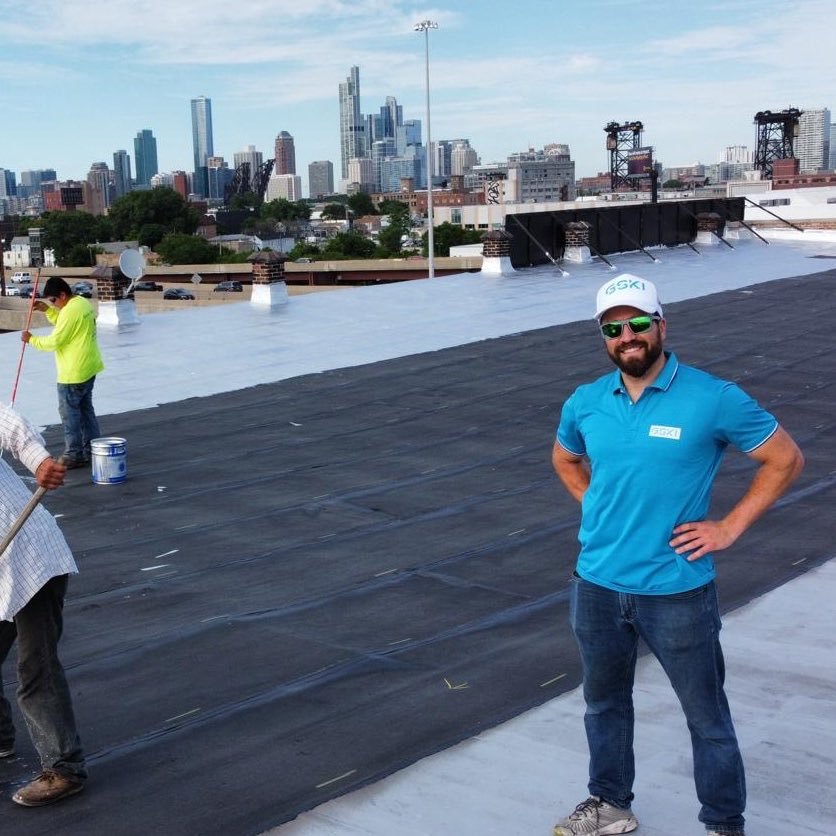
At GSKI Construction, flat roofs are one of our core specialties. Mike Garbowski personally oversees every commercial flat roof project. We've installed hundreds of TPO and modified bitumen systems across Chicago, Hinsdale, Oak Brook, Elmhurst, Highland Park, and the surrounding suburbs.
Not Sure Which System Is Right for Your Building?
Get a free inspection and honest recommendation — no pressure, no upsell. We'll tell you exactly what your roof needs.
Request a Free Flat Roof Inspection