Why Flat Roofs Are Different
If you own a commercial building, a multi-unit property, or a Chicago bungalow with a flat section, your roof operates completely differently than a traditional pitched roof. Flat roofs don't shed water the same way — they rely on membranes, drainage systems, and proper sealing around every penetration point. When they fail, they fail differently too — slow leaks that can go unnoticed for months, causing damage to insulation, decking, and the interior below.
A flat roof replacement isn't just slapping new material on top. It's an engineered system — membrane, insulation, fasteners, flashing, drainage — all working together. Choosing the right system and the right contractor is what determines whether your new roof lasts 15 years or 30.
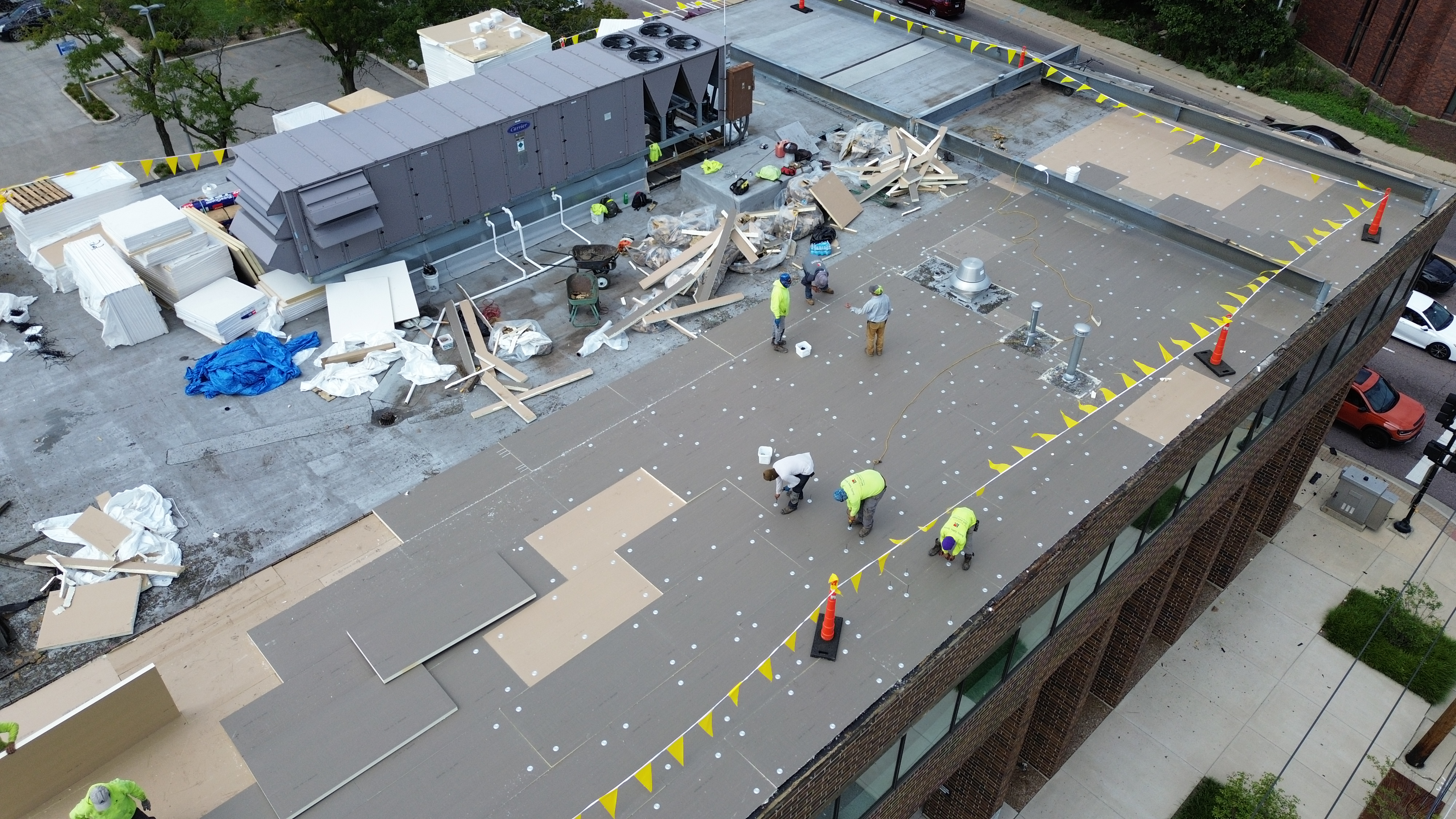
The 4 Main Flat Roofing Systems
TPO (Thermoplastic Polyolefin)
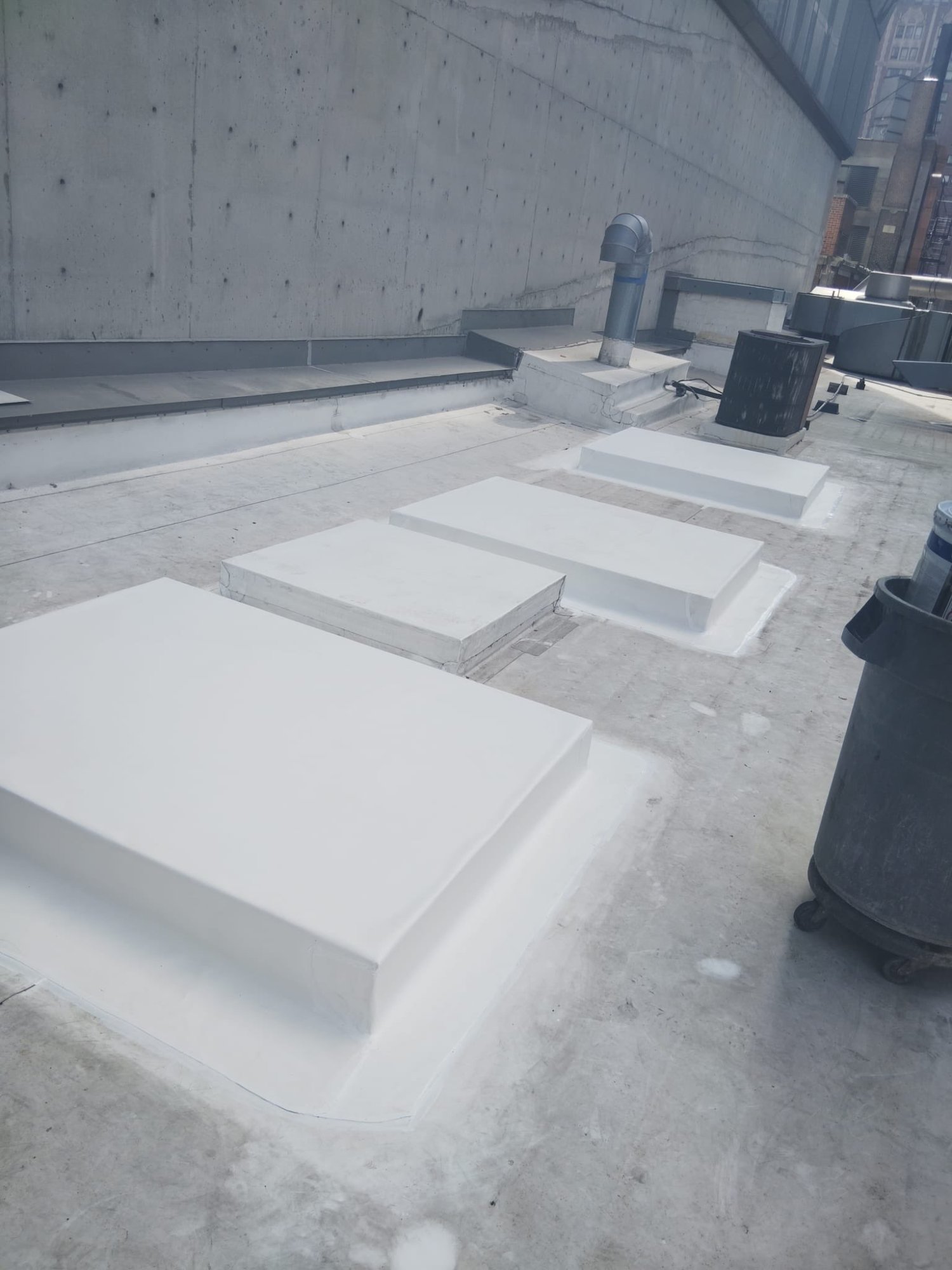
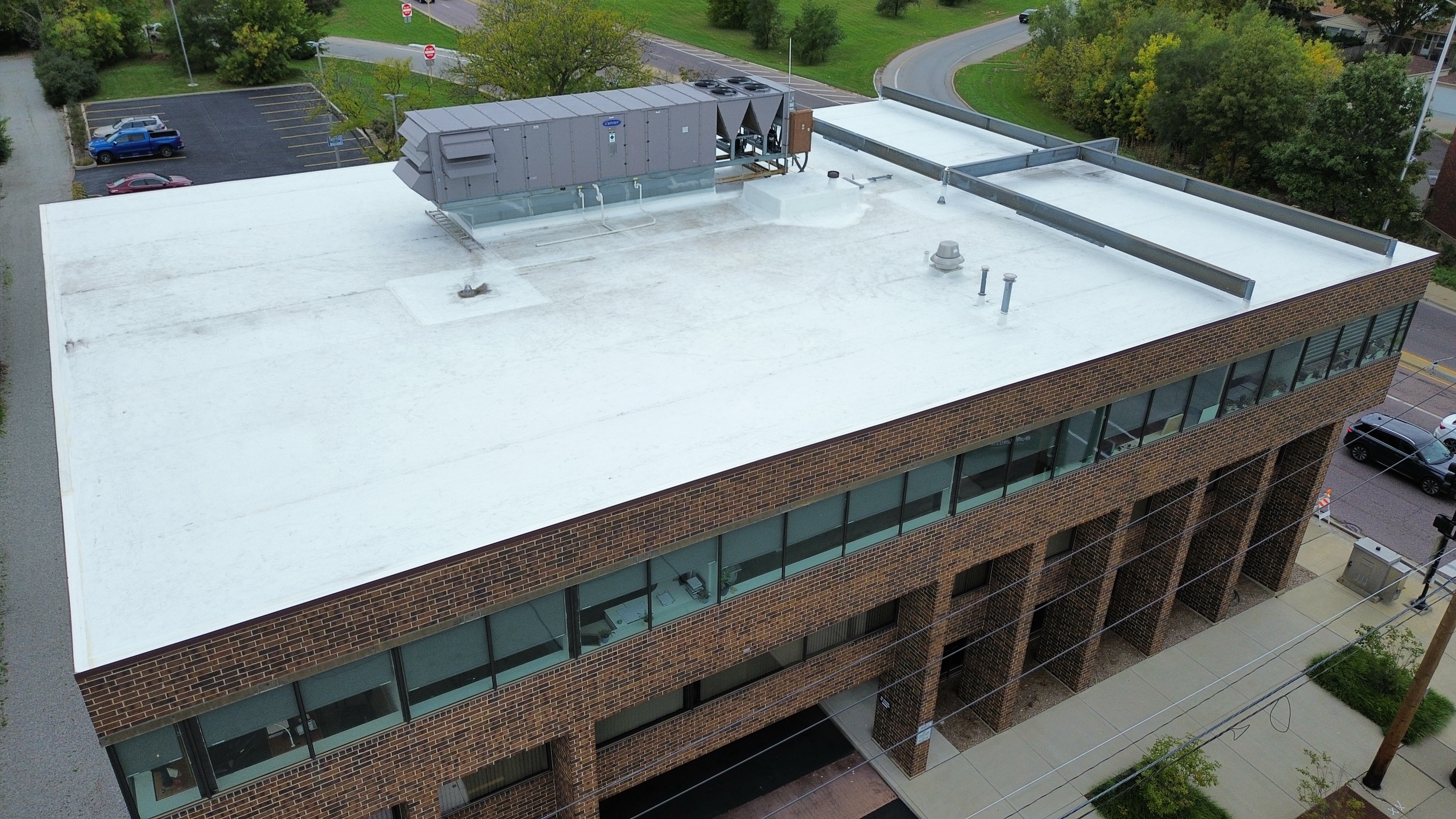
The most popular commercial flat roof system today. A white single-ply membrane that's heat-welded at the seams. Highly energy-efficient — the reflective surface reduces cooling costs significantly. Lifespan of 20-30 years. Best for commercial buildings and larger properties where energy savings matter.
Modified Bitumen
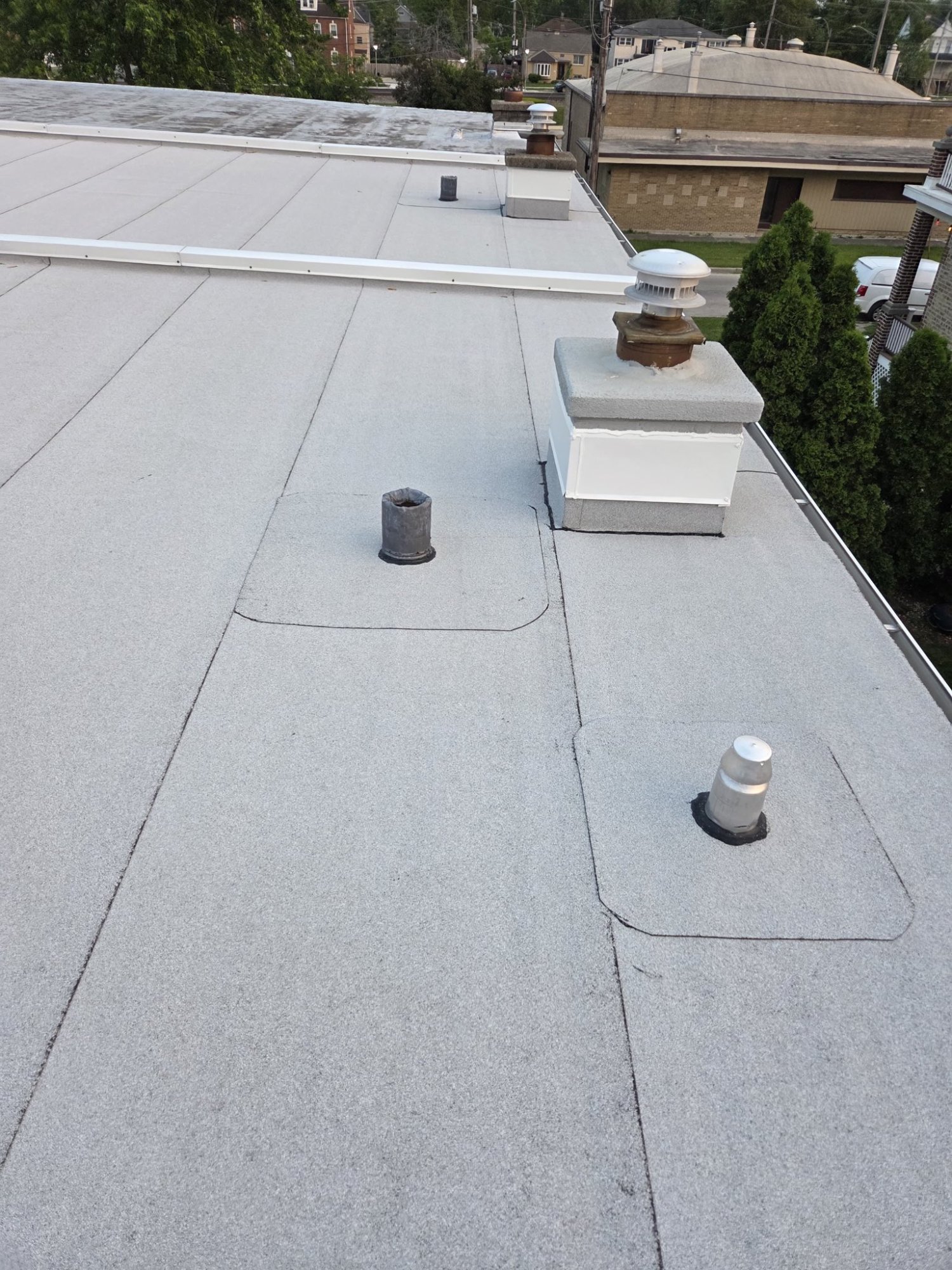
The workhorse of Chicago flat roofs for decades. An asphalt-based system that's either torch-applied or self-adhered. Tough, handles foot traffic well, and proven in our freeze-thaw climate. Lifespan of 15-20 years. More affordable than TPO. Best for residential flat sections and budget-conscious commercial projects.
PVC (Polyvinyl Chloride)
Similar to TPO but even more resistant to chemicals, grease, and oils. The go-to choice for restaurants, commercial kitchens, and industrial buildings. Lifespan of 20-30 years. Slightly more expensive than TPO but virtually indestructible in the right application.
EPDM (Rubber Roofing)
A synthetic rubber membrane that's been used since the 1960s. The most affordable single-ply option. Comes in black (absorbs heat) or white (reflects heat). Seams are glued rather than welded, which makes them the most common failure point. Lifespan of 15-25 years. Good budget option for smaller flat roofs.
How Much Does a Flat Roof Replacement Cost?
| System | Cost/Sq Ft (Installed) | 2,500 Sq Ft Roof | 5,000 Sq Ft Roof | 10,000 Sq Ft Roof |
|---|---|---|---|---|
| TPO | $5.50 – $9.00 | $13,750 – $22,500 | $27,500 – $45,000 | $55,000 – $90,000 |
| Modified Bitumen | $4.00 – $7.50 | $10,000 – $18,750 | $20,000 – $37,500 | $40,000 – $75,000 |
| PVC | $6.00 – $10.00 | $15,000 – $25,000 | $30,000 – $50,000 | $60,000 – $100,000 |
| EPDM | $4.50 – $8.00 | $11,250 – $20,000 | $22,500 – $40,000 | $45,000 – $80,000 |
These costs include tear-off, new insulation, membrane installation, flashing, and cleanup. Additional factors that affect price: the number of rooftop penetrations (HVAC units, vents, pipes), the condition of the existing decking, drainage modifications, and accessibility of the building.
The Flat Roof Replacement Process
1 Inspection & Assessment
We start with a thorough inspection — not just looking at the surface, but checking for moisture in the insulation using infrared scanning or core samples. We assess the condition of the decking, identify all penetration points, evaluate the drainage system, and measure the roof. This determines what system is best and gives you an accurate estimate.
2 Tear-Off
The existing roofing material is completely removed down to the deck. This is the critical step that cheap contractors skip. During tear-off, we inspect every square foot of decking for rot, moisture damage, and structural issues. Damaged sections are replaced before anything new goes on top.
3 Insulation
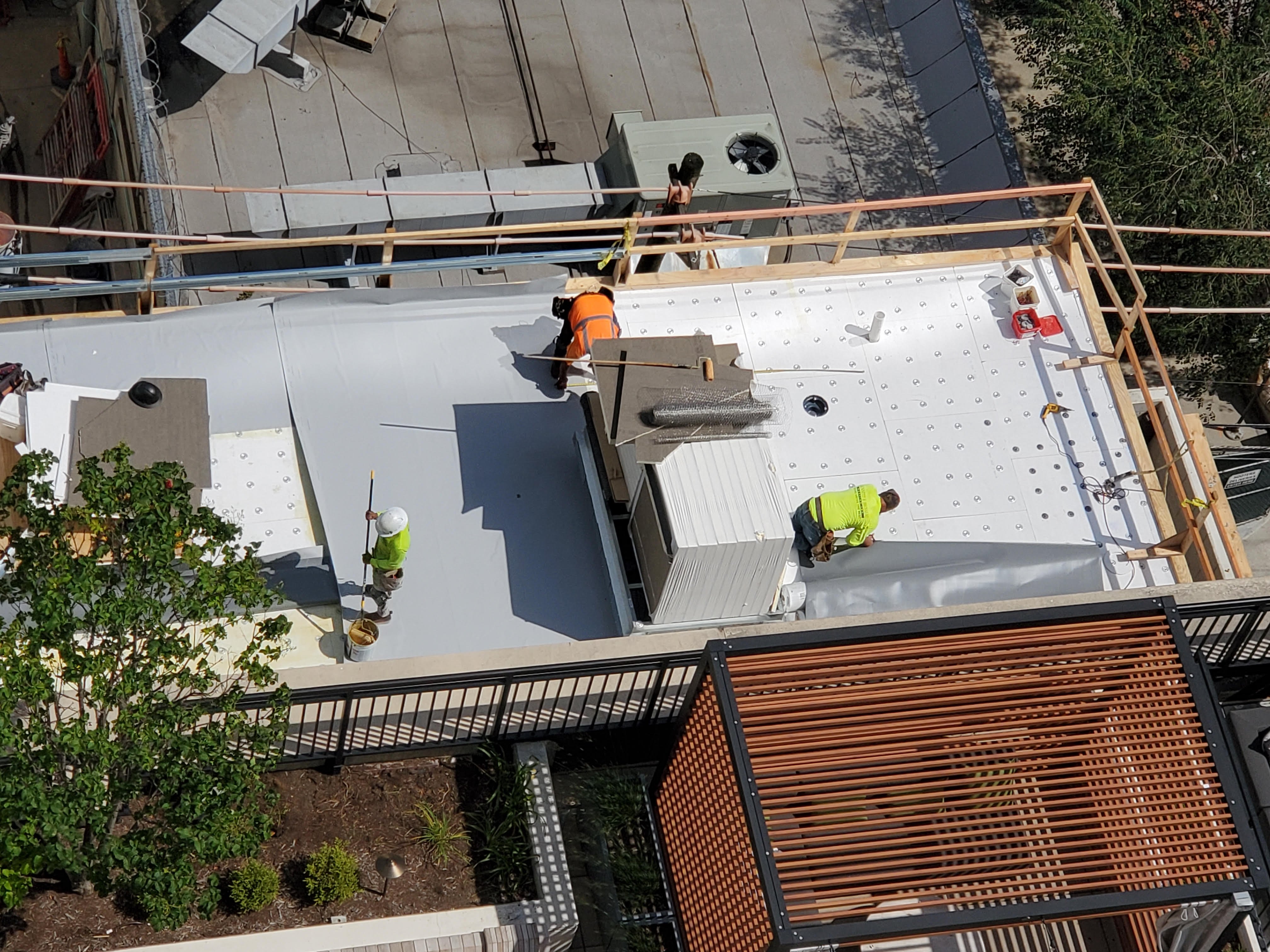
New polyiso insulation boards are mechanically fastened to the deck. The insulation thickness determines your R-value (energy efficiency). Chicago building code has minimum R-value requirements for commercial roofs — we make sure your new roof meets or exceeds them. Proper insulation is what keeps your energy bills down and prevents condensation problems.
4 Membrane Installation
The roofing membrane is rolled out over the insulation and secured. For TPO and PVC, seams are heat-welded using a robotic welder or hand tool — creating bonds stronger than the membrane itself. For modified bitumen, sheets are torch-applied or self-adhered. Every seam, every edge, every penetration point is sealed.
5 Flashing & Detail Work
This is where most flat roofs fail — not in the field, but at the edges and penetrations. Every pipe boot, HVAC curb, skylight, drain, parapet wall, and edge gets custom flashing. This is the most labor-intensive part and the most important. Cheap contractors rush this step. We don't.
6 Final Inspection & Cleanup
We do a thorough final inspection including a water test on all seams and penetrations. All debris is removed, the building is cleaned up, and we walk through the completed project with you. You get full warranty documentation for both materials and workmanship.
Signs Your Flat Roof Needs Replacement
Ponding water — if water sits on your roof for more than 48 hours after rain, your drainage system or roof structure has issues. Chronic ponding accelerates deterioration.
Bubbling or blistering — trapped moisture under the membrane causes bubbles. Small blisters can be repaired, but widespread blistering means the system is failing.
Visible seam separation — open seams are active leak points. If multiple seams are separating, patching won't solve the underlying problem.
Interior water stains — by the time you see water inside, the damage has been building for a while. The insulation is likely saturated and will need full replacement.
Age — if your flat roof is past 15 years (modified bitumen) or 20 years (TPO/PVC), it's time for an inspection even if it looks fine from a distance. Issues often aren't visible from the ground.
Rising energy bills — wet or deteriorated insulation loses its R-value. If your heating and cooling costs have been climbing, your roof could be the cause.
Does Insurance Cover Flat Roof Replacement?
If your flat roof was damaged by a storm event — hail, wind, or fallen debris — your insurance typically covers the replacement. The key is having proper documentation. At GSKI Construction, we inspect your roof, document all storm damage, meet with the insurance adjuster, and manage the claims process so you get the coverage you deserve. Many commercial property owners have had their entire roof replacement covered by insurance.
Why Chicago's Climate Is Hard on Flat Roofs
Chicago's freeze-thaw cycles are particularly brutal on flat roofs. Water pools, freezes, expands, and works its way into every tiny gap in the membrane. Then it thaws and the cycle repeats — dozens of times per winter. Add summer heat that causes thermal expansion and UV degradation, plus occasional hail storms, and it's clear why flat roofs in Chicago need proper materials and expert installation.
This is why we recommend TPO or PVC for most commercial applications — the heat-welded seams handle thermal cycling far better than glued seams. And why we always use quality insulation — it's the thermal buffer that protects the membrane from extreme temperature swings.
Choosing the Right Contractor for Your Flat Roof
Flat roofing is a specialty. Not every residential roofer can do it well. Look for a contractor with specific flat roof experience — ask how many flat roofs they've installed, what systems they're certified in, and whether they have commercial references. The difference between a well-installed and poorly-installed flat roof is the difference between 25 years of protection and 5 years of problems.
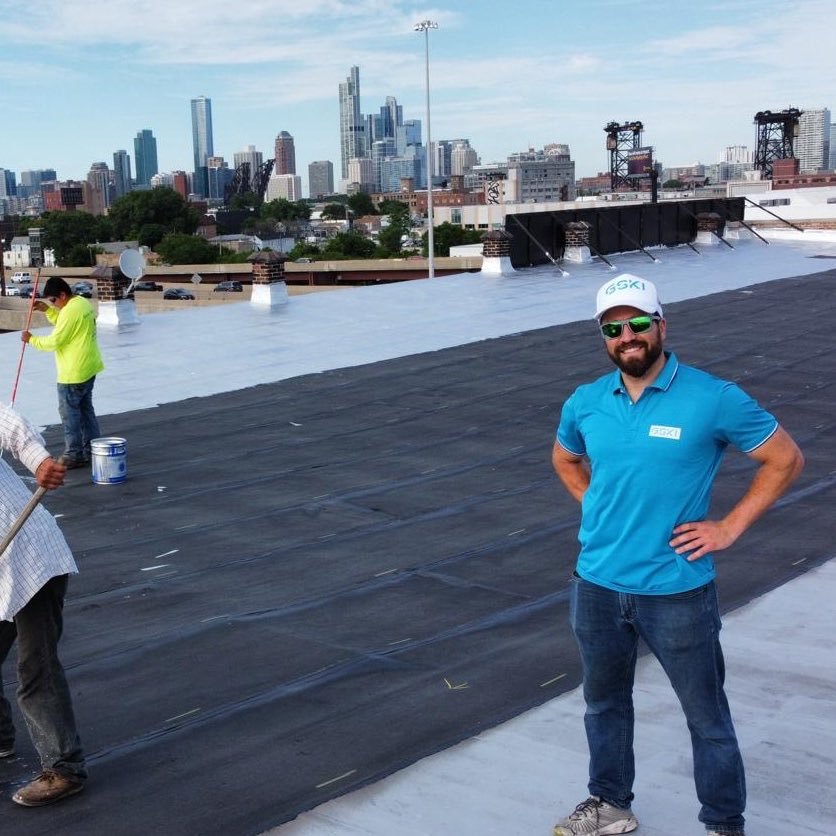
At GSKI Construction, flat roofs are one of our core specialties. We install TPO, modified bitumen, PVC, and EPDM systems across Chicago, Hinsdale, Oak Brook, Elmhurst, Highland Park, Park Ridge, Wilmette, Glencoe, and Northbrook. Every project comes with a warranty and Mike's personal oversight.
Need a Flat Roof Replacement?
Get a free inspection and detailed estimate — we'll tell you exactly what system is right for your building and what it will cost.
Request a Free Flat Roof Inspection